
Most teams treat test weights as static mass, but that assumption creates problems during testing. You end up with inconsistent load setups, slower certification cycles, and higher replacement costs from equipment that does not hold up over time.
Your test weights directly influence how accurately you validate equipment, how efficiently your team completes required testing, and how safely those weights can be used on site.
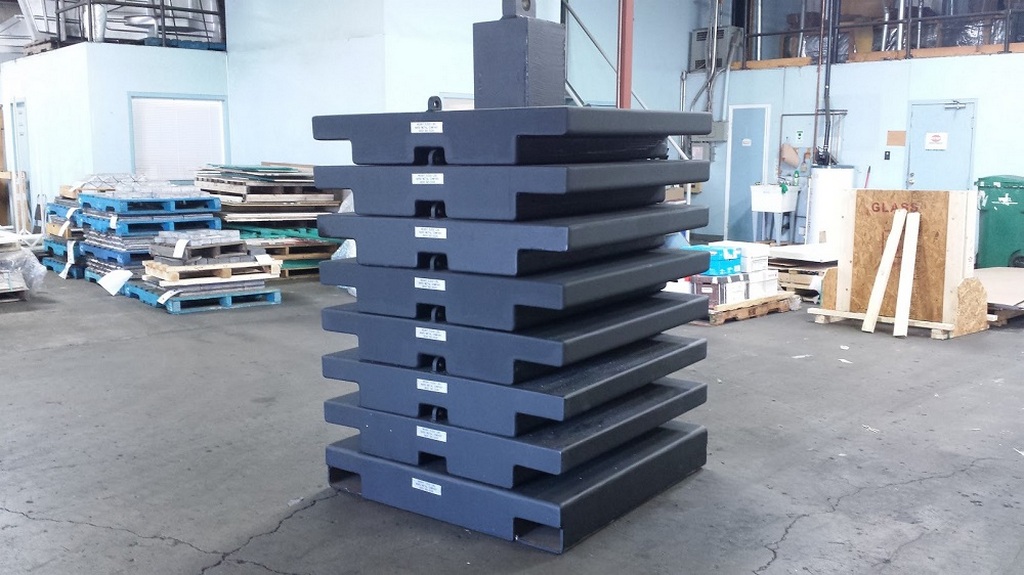
Stackable test weights address these issues by giving you control over how loads are built and repeated. Instead of relying on fixed, single-piece weights, you can configure precise combinations that match your testing requirements. They improve reliability, reduce setup time, and support consistent results across every test cycle.
What You’ll Learn
- How stackable test weights improve load accuracy and repeatability.
- Why durability affects both safety and long-term cost.
- How material selection changes performance and space requirements.
- Where stackable systems are used across aerospace, construction, and industrial testing.
- How design performance engineering shapes reliable weight systems.
- What to evaluate before choosing a test weight solution.
Why Test Weights Directly Affect Equipment Performance
You rely on test weights to confirm that equipment performs under load. If the weight system is inconsistent, your test results are unreliable.
In aerospace, weight distribution testing simulates real operating conditions such as uneven loading and shifting mass. In crane and hoist applications, certification depends on proving that equipment can safely lift its rated capacity. These tests require exact weight values and stable configurations.
If your test weights are not engineered for accuracy and repeatability, you are introducing error into a process that is supposed to remove uncertainty. Three factors that must be considered are the ability to stack the test weights, the durability, and the material selection.
Stackable Test Weights Build the Exact Load You Need Every Time
A fixed weight limits how you test. Stackable systems allow you to build the exact load required for each application.
This is especially important when you’re testing multiple machines or working across different capacity ranges. Instead of maintaining separate weight sets, you configure one system to match each requirement.
You also reduce setup time. Crews can assemble the required load quickly when each unit is clearly labelled and designed to stack securely. That reduces setup errors and keeps testing on schedule.
A properly engineered stackable system does two things at once. It gives you flexibility in how you test, and it maintains the reliability needed for certification.
What Happens When Your Test Weights Don’t Hold Up?
Your team handles test weights repeatedly. They move them between sites, stack them, and reconfigure them for different equipment. Over time, poor design shows up in three ways:
- Weight deformation that affects measurements
- Structural wear that creates operational risk
- Frequent replacement that increases cost
Testing does not happen once. Many operations require annual or scheduled recertification. If your weights degrade, your testing process slows down. Crews spend more time verifying loads, and you increase the chance of delays during certification.
Durable construction, proper material selection, and protective finishes keep the system consistent over years of use.
Material Choice Changes How Your System Performs
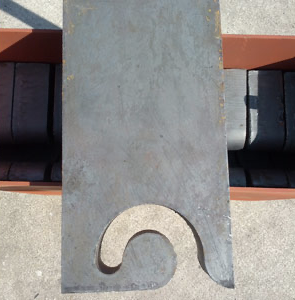
Material selection is one of the most important decisions in counterweight design. Lead and steel behave differently, and that affects how you use them.
Lead provides higher density. You can achieve the same weight in a smaller volume, which is critical in confined spaces such as elevator cars or aircraft interiors.
Steel offers lower cost and strong structural properties. It works well when space is not restricted and when budget is a primary concern.
Material selection is a core design decision that shapes how your weight system performs, fits, and functions during every test cycle.
Where Stackable Test Weights Are Used
Stackable systems support a wide range of applications where testing must be precise and repeatable.
In aerospace, engineers use modular ballast systems to simulate load distribution and stress conditions. These weights must be easy to position and secure during testing. Stackable and reconfigurable systems allow teams to place weight exactly where it is needed, which improves control when validating uneven loading and shifting conditions.
In construction and industrial environments, heavy machinery counterweights are used for crane and hoist certification. Teams need to adjust loads quickly across different equipment without maintaining separate weight inventories. Stackable configurations make this possible by allowing crews to build exact loads using the same set of weights, reducing setup time and simplifying testing across multiple machines.
In elevator testing, compact and dense configurations are required to simulate passenger loads within tight spaces. Handling becomes a major factor because weights are moved frequently in confined areas. High-density materials such as lead allow you to achieve required loads in a smaller footprint, while stackable designs keep the system manageable and efficient.
Across all of these applications, the requirement is the same. You need precise weight, safe use, and repeatable performance.
Design Performance Engineering for Test Weights
Standard products rarely meet the exact needs of testing environments. You need a system that matches your equipment, your space, and your workflow. Mars Metal applies design performance engineering to align each weight system with real testing conditions.
That process begins with defining your load requirements and how your team will move and configure the weights. CAD models are then used to confirm dimensions, stacking fit, and weight distribution before anything is built. This ensures the system performs as expected in your actual testing environment, not just on paper.
Collaboration with your supplier plays a direct role in this. Our design team works with you to understand how you test equipment and adjusts configurations to integrate right into your workflow.
Each weight system is then built to match those requirements, with clear labelling, consistent dimensions, and configurations that support repeat use. Options such as lead-filled or steel weights are selected based on your space constraints, handling needs, and budget.
Our approach reduces variability in testing and gives you a system that performs consistently across every cycle.
What You Should Evaluate Before Choosing a System
Before selecting a supplier, you need to look beyond total weight. Focus on how the system performs in practice:
- Long-term performance: Do the weights maintain accuracy after repeated use, or do they degrade over time?
- Configuration fit: Does the system match your equipment and meet your testing and certification requirements?
- Handling efficiency: Can your team move, stack, and assemble the weights quickly and safely during each test cycle?
- Durability: Are the weights built to withstand repeated testing, transport, and environmental exposure?
- Delivery timelines: Can the supplier meet your schedule, or will delays impact your certification process?
How Better Weights Improve Your Testing Workflow
When you treat test weights as engineered systems, you remove variability from your testing process.
You complete certifications faster because setups are consistent. You reduce setup risk because the system is designed for your workflow. You avoid replacement costs because the weights are built for repeated use.
These gains come from design decisions made at the start. Material, shape, and configuration all affect how your system performs in the field.
Start With a System That Matches Your Process
If your current setup limits accuracy or slows down testing, it is time to review your system.
Work with a team that builds custom counterweight engineering solutions around your equipment and testing requirements. Whether you need lead balance weights for compact environments or heavy machinery counterweights for large-scale testing, the design should match how you operate.
Request a custom configuration review and get a system designed for your exact testing conditions.
Frequently Asked Questions About Stackable Test Weights
What are stackable test weights used for?
Stackable test weights are used to simulate specific load conditions during equipment testing and certification. They allow you to build precise weight configurations for cranes, elevators, aircraft, and other systems that require validated performance under load.
Why choose stackable test weights over fixed weights?
Stackable test weights give you flexibility. You can adjust loads for different equipment using the same system, reduce setup time, and maintain consistent test conditions without needing multiple fixed-weight sets.
What materials are best for test weights?
Lead and steel are the most common materials. Lead is ideal when space is limited because it offers higher density, while steel is often used when cost is a priority and space constraints are less restrictive.
How do stackable test weights improve testing consistency?
They allow you to build the same load configuration every time. With clearly labelled units and repeatable stacking setups, your team can recreate identical test conditions across multiple cycles.
Can test weights be customized for specific equipment?
Yes. Custom counterweight engineering allows test weights to be designed for your exact equipment, storage and transport requirements, and testing standards. This ensures proper fit, safe handling, and reliable performance during certification.